
Stay Informed
Stay Connected · Parkland Riding

Stay
Informed

Subscribe to Dane's newsletter, follow on social media, and join the team making a difference for Parkland riding.

Newsletter

Get Dane's Updates
in Your Inbox

Join thousands of Parkland residents who receive Dane's regular updates — including riding news, parliamentary highlights, community events, and important announcements.

Dane's newsletter is the best way to stay connected with what's happening in Ottawa and across Parkland riding.

Riding updates and community news
Parliamentary highlights and statements
Upcoming events and town halls
No spam — unsubscribe any time

Subscribe Today

Free, no spam. Unsubscribe any time.

In Parliament

House & Committee Interventions

Transcripts of Dane's speeches in the House of Commons and committee. Click Expand to read the full text. openparliament.ca

March 26, 2026 House

Addressing the Continuing Victimization of Homicide Victims' Families Act

Madam Speaker, it is an honour to rise and speak to this legislation that I brought forward.

I want to start by thanking the McCann family, my colleagues of the House and all the supporters of the legislation and the victims' families.

Expand to read full transcript

This has been a nine-year journey for me. I was first inspired to bring forward the legislation before I was elected. I was inspired by the model put forward in Australia, and I was also inspired by advocates in the United Kingdom fighting for justice through Helen's law, so I want to thank them for inspiring me.

The legislation is named after Lyle and Marie McCann. Their killer remains incarcerated, but he is currently eligible for parole. He has refused to disclose where he hid the remains of his victims. The victim's family, the McCanns, has never been able to hold a proper funeral or have closure.

I believe that the continued withholding of that information by convicted offenders is an ongoing crime against the victims and their families. It is a crime that currently has no consequences. The possibility that people could be released on parole and be walking our streets while knowing where they hid their victims' remains, or that they could pass by their victims' families on the streets while they still know that information, is abhorrent to Canadians.

I want to address some of the criticism brought forward with respect to the legislation, and I do appreciate the opportunity to address it. I think it is unmerited. The fact is that the Parole Board does not need to consider an offender's refusal to co-operate and/or admit to their crime as a factor in parole hearings.

I would like to quote directly from the transcript of the killer in this case's parole hearing in December 2024. The Parole Board clearly stated that accountability and co-operation is not a requirement to be granted parole. Ryan Nash, a member of the Parole Board, stated to the killer, “You are entitled to hold your position of denial of accountability and responsibility, and it is not required to be granted parole that you admit to your offences.” I think this summarizes why the legislation is so needed.

In debate today, there were some other criticisms brought forward. My colleagues claimed that the legislation could result in killers' receiving a shorter period of parole ineligibility than is currently prescribed by law. That is simply not the case. In Canada, first-degree murder already requires that there be a period of parole ineligibility of 25 years, and in second-degree murder cases, a period of parole ineligibility of 10 to 25 years. In the McCann case, as well as others, the killer was not found guilty of first- or second-degree murder but was found guilty of manslaughter and was eligible for parole after a period of seven years.

In cases where someone is found to be withholding crucial information about the remains of their victims but is not convicted of first- or second-degree murder, the legislation could be utilized by the judicial system and parole boards to increase the period of parole ineligibility and to deny parole.

I want to assure all members of the House that there is nothing in the legislation that would dictate to judges, parole boards or correctional officials what they must do. They would retain full discretion to utilize the tools that Parliament provides them in the legislation as they find appropriate.

I know that the people who work in our criminal justice system, our judges, parole board members and correctional officials, are professionals and may have reasons why they may or may not consider the co-operation to find a victim's remains as a factor in their decision-making. For example, if they have a reasonable belief that the remains of victims will never be found, of course it would not be appropriate to use this legislation in that case.

The only requirement the legislation would impose is that our judicial system actors consider this very important factor, and I think that is the least we can do for victims' families. It would also require that, in cases where they choose not to utilize these tools, they provide reasons for not utilizing them. Again, I think that providing those reasons to victims' families is the least we can do.

I want to read a letter from Bret McCann, the son of Lyle and Marie:

“On July 3, 2010, my parents, Lyle and Marie McCann, were murdered. The individual responsible was later convicted and sentenced to life imprisonment, yet he has never acknowledged his crime nor disclosed the location of my parents' remains. As a result, our family has been denied the most basic elements of closure: truth, accountability, and the ability to lay our loved ones to rest.

“Bill C-236 addresses a profound gap in Canada's criminal justice system. Meaningful rehabilitation and any credible assessment of parole eligibility must require offenders to accept responsibility for their crimes. In cases such as ours, the responsibility includes providing information about the whereabouts of victims' remains. Without such accountability, parole processes risk compounding the harm suffered by victims' families.

“Comparable legislation has already been adopted in other Commonwealth countries, including Australia's ‘No Body, No Parole’ laws and the United Kingdom's Helen's Law. These measures recognize that compassion for victims and public confidence in the justice system demand more than silence from convicted offenders—

Source: openparliament.ca
March 26, 2026 House

An Act Respecting Cyber Security

Madam Speaker, it was a true pleasure working with my colleague on the public safety committee. I want to talk about one particular area where we worked together to improve the legislation.

Often, we have seen, when passing new or novel legislation that would give the government new powers, we put in review clauses to ensure that, after a specified period of time, usually five years, we could review the legislation to make sure that it is working as intended. Unfortunately, we have seen many pieces of legislation passed for which these reviews have never taken place.

Expand to read full transcript

I am very proud that I was able to work on what was initially brought forward by my colleague to try to strengthen that, to ensure that the government has to complete a review. It cannot just keep kicking the can down the road. I want to know what the member's thoughts are on that particular amendment.

Source: openparliament.ca
March 23, 2026 House

Public Safety

Mr. Speaker, the Liberals can try to distract and make Canadians look away from their absolute failure. The Auditor General's report is damning: 3,400 RCMP officers short. The Liberal government is continuing to fail to train and retain the officers we need to protect our communities, and it could not come at a worse possible time. After 10 years of the justice minister's failure to toughen up our justice system, there is a wave of violent crime rushing across our country and our police are completely burnt out.

Why is the Liberal Prime Minister failing to live up to his promises to strengthen law enforcement and protect our communities?

Source: openparliament.ca
March 23, 2026 House

Public Safety

Mr. Speaker, the Liberals talk about hiring 1,000 new RCMP officers. They cannot even keep up with losses. The Liberals are failing to recruit, train and retain the police we need to protect our communities. In rural Canada, which I represent, police are stretched to the breaking point. They cannot keep up with the wave of violent crime that the Liberals have unleashed. The Auditor General has now reported that under the Liberals' watch, the RCMP is short 3,400 officers, and the gap is continuing to grow.

The Liberal Prime Minister and his party made big promises to Canadians. They promised 1,000 new officers, but they are yet again failing to deliver any results. It is time for these Liberals to stop promising and start delivering. Why will they not?

Source: openparliament.ca

Social Media

Follow Dane Online

Stay up to date with Dane's latest statements, videos, and community events across all platforms.

Facebook — @DaneLloydCPC Open ↗
YouTube — Dane Lloyd, MP Open ↗

Watch Dane's latest videos, speeches, and community updates.

Subscribe

Get Involved

Join the Team

There are many ways to support Dane and make a difference for Parkland riding.

Volunteer

Join Dane's volunteer team and help make a difference in your community — from canvassing and events to office support.

Sign up to volunteer

Careers

Interested in working for Dane's constituency or parliamentary office? We're always looking for passionate, dedicated Albertans.

View opportunities
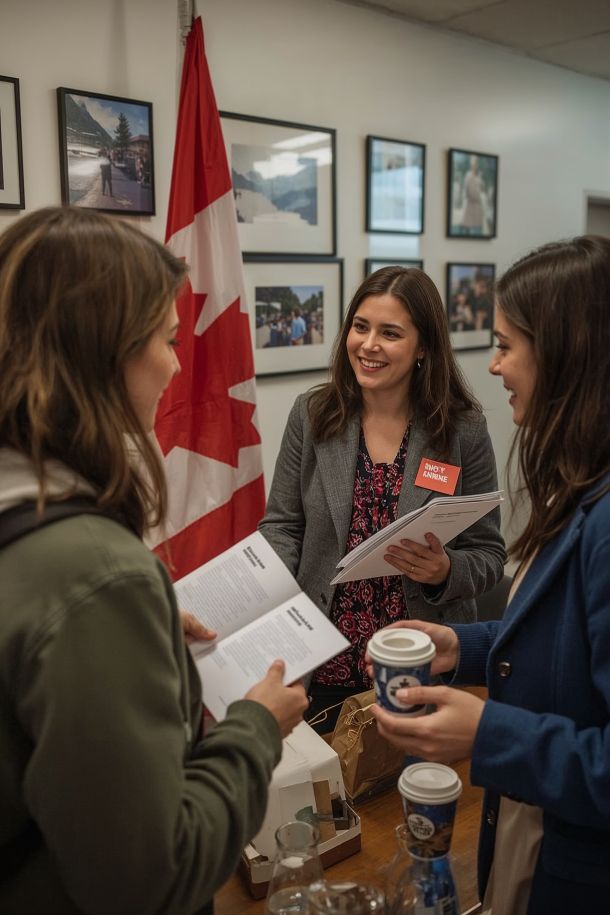
Parkland volunteers

Together

Making a Difference
for Parkland

Every volunteer, every subscriber, and every voice makes Dane's work stronger. Join the team today.

Contact Dane's Office
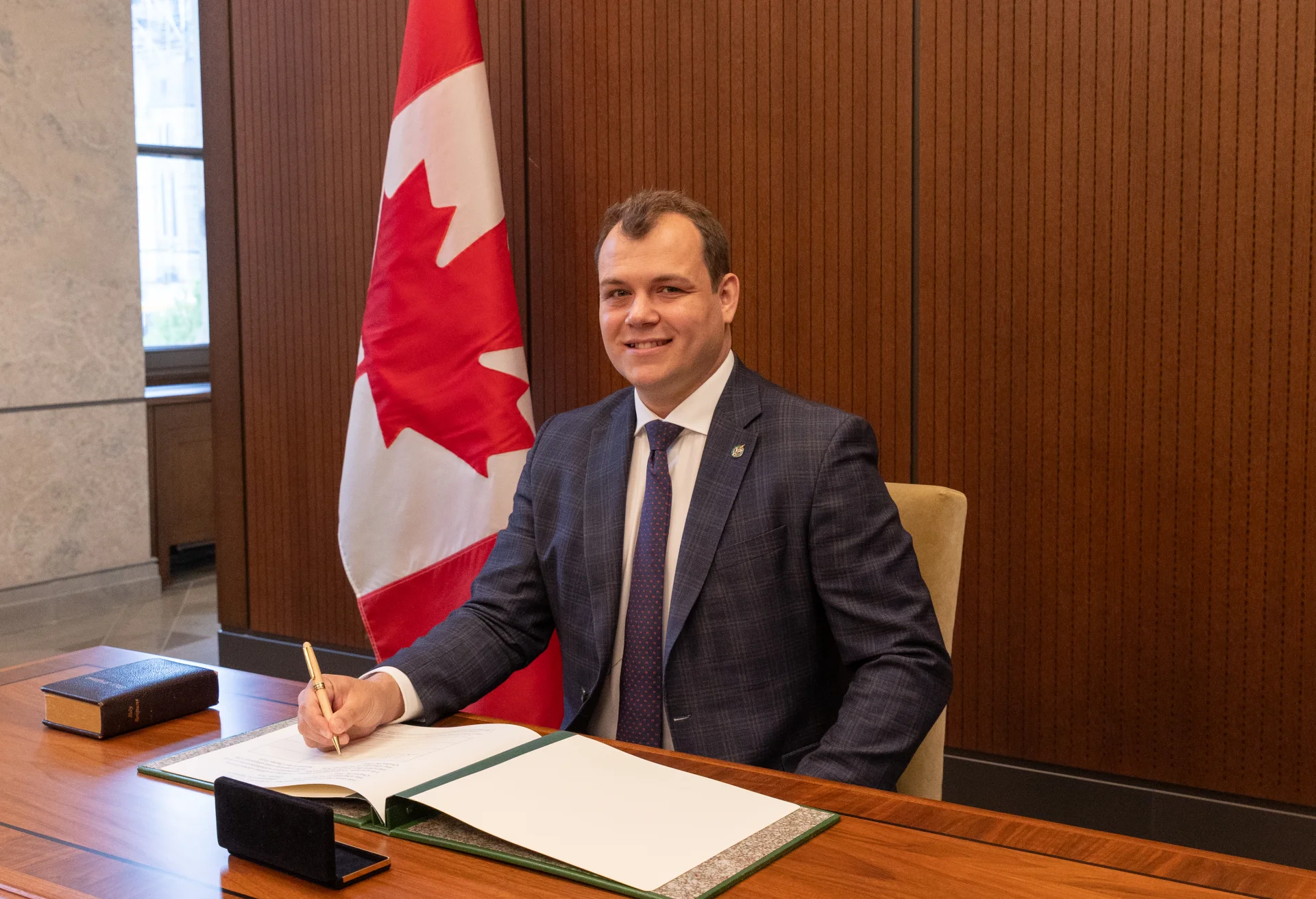
Dane
Dane Lloyd's Office
Online
Hi! Welcome to Dane Lloyd's website. How can we help you today?